0

Retiring or Replacing Old Shared Content
Purpose
Old shared content should be retired deliberately. Deleting a shared content item too early can break pages, feeds, widgets, downloads, or references that still rely on it.
Use this page when a reusable Content Hub item, image, FAQ, content chunk, or other shared item is out of date and you need to decide whether to update it, replace it, unpublish it, archive it, or remove it.
What this page teaches
- How to check where a shared content item is used before changing it.
- When to update an item in place and when to create a replacement.
- How smart or dynamic listings can be affected by taxonomy, content type, language, status, or folder choices.
- Why unpublishing or archiving is usually safer than deleting.
Check usage before making changes
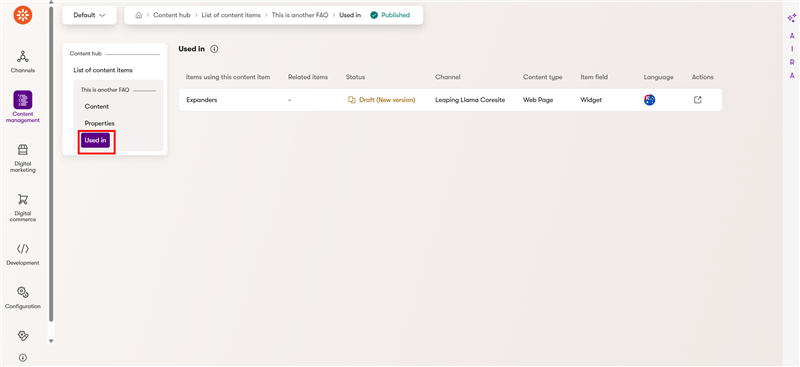
Open the old content item in the Content Hub and select the Used in tab. This view shows the pages or items that currently reference the content item, including the related item name, status, channel, content type, item field, and language.
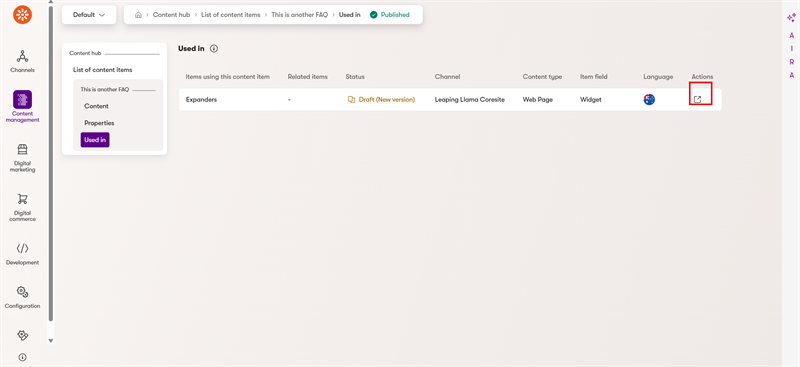
If a row appears in the Used in list, do not delete the shared item until you have reviewed the affected page or content item. Use the open in new tab icon in the Actions column to open the admin view for the item that uses the shared content. This lets you inspect the real widget, field, or page before deciding what to change.
Choose the safest retirement option
Update the existing item when every current reference should show the revised content. This is usually the right choice for a corrected biography, updated phone number, corrected FAQ answer, or replaced image where the meaning stays the same.
Create a replacement item when only some pages should use the new content, or when the old item needs to remain available for historical, campaign, approval, or audit reasons. After creating the replacement, update each affected page or widget to select the new item.
Unpublish or archive the old item when it should no longer be shown, but you still need a recoverable record. This is safer than deleting because it reduces the risk of permanently removing something that another page, listing, or campaign still depends on.
Delete only when usage has been checked, the item is no longer needed, and the project team agrees that it does not need to be recovered later. If there is any uncertainty, unpublish or archive instead.
Watch for smart or dynamic listings
Some pages do not select every shared item manually. A listing, smart folder, dynamic folder, or developer-built query may show content because the item matches rules such as content type, workspace, folder, taxonomy, language, published status, or another field value.
Before retiring an item that appears in a dynamic set, check what makes it appear there. If the replacement item should appear in the same listing, make sure it has the same required taxonomy, content type, language, status, and other required values. If the old item should disappear from the listing but stay in the system, removing or changing the relevant taxonomy or publishing status may be safer than deleting the item.
Pro Tip: If content appears in a smart or dynamic folder, the folder may not store a manual selection. It may be showing the item because the item matches filters. Check the item’s taxonomy, content type, language, folder, and published status before assuming it can be removed safely.
Basic workflow
- Open the old content item in the Content Hub.
- Check the Used in tab and open each affected item that needs review.
- Decide whether the content should be updated in place, replaced, unpublished, archived, or deleted.
- Create replacement content if the old item should not be reused everywhere.
- Update pages, widgets, feeds, and content selections to use the replacement where needed.
- Check any smart folders, dynamic folders, listings, or feeds that may include the item because of filters.
- Unpublish or archive the old item once references are resolved.
- Preview affected pages and feeds before publishing related changes.
Quality checklist
- The Used in tab was checked before the old item was changed or removed.
- Any affected page or item was opened from the Used in list and reviewed directly.
- Replacement content exists where needed.
- Pages, widgets, listings, feeds, and downloads no longer show stale content.
- Dynamic folder or smart listing filters were checked before taxonomy, status, or folder values were changed.
- The old item was unpublished or archived instead of deleted unless deletion was confirmed as safe.
- Affected pages were previewed after the change.
Related Articles
Login Panel
Home
- About
-
Research
-
Our research
- Col Reynolds Fellowships
- Our research investment
-
Currently funded projects
- PhD Scholarship recipient, Jasmine Jin
- Dr Lee Wong
- Professor David Eisenstat
- Dr Jordana McLoone
- Professor Simon Conn
- Professor Bryan Day
- Dr Evangeline Jackson
- Dr Michelle Tennant
- Dr Ryan Cross
- Dr Emmy Fleuren
- Dr Noemi Fuentes-Bolanos
- Ms Rachel Edwards
- PhD Scholarship recipient, Lorna McLeman
- PhD Scholarship recipient, Bryce Thomas
- PhD Scholarship recipient, Chelsea Valentin
- Professor Rishi Kotecha Interfant 21 Clinical Trial
- Professor Matt Dun
- Dr Kate Vandyke
- Professor Richard D'Andrea
- Dr Aaminah Khan
- Dr David Mizrahi
- Dr Karin Plummer
- Dr Kenny Ip
- Dr Katherine Pillman
- Dr Teresa Sadras
- Dr Noa Lamm-Shalem
- Dr Rachael Lawson
- Dr Marion Mateos
- Dr Joseph Yuan-Mou Yang
- Jacqueline Hunter
- Dr Hannah Walker
- Dr Tessa Gargett
- Dr Klaartje Somers
- Dr Jacqui McGovern
- Dr Elizabeth Connolly
- Associate Professor Geoff McCowage
- Professor Nick Gottardo
- Comprehensive analysis of gene changes in childhood cancer patients and their parents
- Col Reynolds Fellowships, Megumi Hui Ai Lim
- Towards safe and effective immunotherapy for soft tissue sarcomas
- Training Natural Killer cells for Immunotherapy for children, adolescent, and adults with sarcoma
- Col Reynolds Fellow, Philipp Graber
- A new and effective combination therapy for children with brain cancer
- Utilising cord blood-derived Natural Killer cells to prevent post-transplant relapse in Childhood Leukaemia
- Identification of Megakaryocyte and Platelet Bone Marrow Niches
- Clinical translation of CAR T cell therapy for the treatment of sarcoma
- RECOVER – Responding to late effects in survivors of childhood cancer
- Preclinical drug-testing to evaluate PARP inhibitors for infants with acute lymphoblastic leukaemia
- (GENIE) A combined GENetic and follicle density risk prediction approach to identifying InfErtility risk in paediatric cancer patients
- Pharmacogenetics real-time implementation of rare-toxicity predisposition (PRIORITY-P)
- iBounce digital health educational program
- Targeting the thioredoxin system as a novel strategy for DIPG
- Identification of a sarcoma molecular prognostic and therapy resistance signature
- Pharmaco-phospho-proteo-genomics of paediatric high-grade glioma (HGG)
- Reducing long-term side-effects of chemotherapy in cancer survivors
- Exploiting the DNA damage response in paediatric sarcoma
- Detecting chemotherapy resistance and sequencing residual malignant tissues in sarcoma treatment
- Targeting altered serine metabolism in MLL-rearranged paediatric acute myeloid leukaemia (AML)
- Enhancing radiation therapy to improve survival outcomes for children with aggressive brain cancer
- Identifying the right sarcoma treatment at the right time
- National Tumour Biobanking Network
- Targeting IL-23 in bone and soft tissue sarcomas
- Enhanced polyamine depletion for aggressive childhood cancers
- Personalised targeted therapy for adolescent and young adult medulloblastoma patients
- Application of gene-silencing nanodrugs to inhibit medulloblastoma growth
- Reboot-Kids
- Pre-clinical anti CD-47 therapy
- Targeting Polo-like kinase 1 as a novel therapeutic opportunity for diffuse intrinsic pontine glioma
- The NORTH Trial
- "Cage fighting" with neuroblastoma
- Intraoperative immunotherapy to prevent relapse in soft tissue sarcoma
- Using smarter new drugs to reduce long term debilitating side effects for aggressive childhood brain
- International clinical trials support
- Personalised Medicine: Zero Childhood Cancer
- Exploiting CDK4/6 inhibition to treat medulloblastoma
- Targeting the NAD pathway as a new therapeutic strategy for high-risk leukaemia in children
- IntReALL-HR
- Understanding the genetic basis of chemotherapy-induced cardiomyopathy
- New state-wide Children’s and Adolescent/Young Adult Cancer Clinical Trials Unit
- Pre-clinical development of novel immune therapy for paediatric cancers
- Investigating drug resistance and genetic changes in Ph-like ALL in adolescents
- Epigenetic targeted therapy in DIPG
- Impact of treatment on late effects and survivorship on childhood cancer survivors
- Developing treatments for vincristine-induced neuropathy
- Development of a non-invasive diagnostic and prognostic assay for adolescent testicular cancer
- MicroRNA drugs for the treatment of neuroblastoma
- 3D printers and mini-brains
- Overcoming therapeutic resistance in high risk ALL using novel BH3 mimetic
- Using targeted chemotherapies to reduce intensity of radiotherapy in medulloblastoma
- New therapies for incurable paediatric brain tumours
- Combinational therapeutics in high-risk infant acute lymphoblastic leukaemia
- Reversing glucocorticoid resistance in paediatric acute lymphoblastic leukaemia – a novel epigenetic
- Ready, Steady, School
- Targeting FACT to inhibit MYCN-driven transcription in neuroblastoma
- Exploring better and safer treatments for osteosarcoma
- Therapeutic targeting transcriptional addiction in paediatric leukaemias
- Synthetic retinoid therapy for diffuse intrinsic pontine glioma
- Development of CAR T cell immunotherapies for paediatric patients
- Development of personalised medicine approaches to treat medulloblastoma
- Novel therapies for diffuse intrinsic pontine glioma (DIPG)
- Improving chemotherapy regimens for medulloblastoma
- Next gen sequencing to identify gene mutations in childhood cancer patients
- New therapeutic targets for paediatric medulloblastoma
- Novel targets to treat medulloblastoma
- Personalised disease monitoring in childhood AML
- Re-engage
- Improving treatments for infant acute lymphoblastic leukaemia (iALL)
- International DFMO clinical trial
- Drug discovery project
- Treatment of solid paediatric cancers with tropomyosin targeted therapy
- Tumour Bank at CHW
- Developing novel immunotherapies for childhood blood cancers
- Stathmin regulation of microRNA expression in neuroblastoma cells
- Bio-banking and personalised medicine software platform
- Improving the cure rates of childhood brain cancer
- Switching off genes
- Clinical trial of new treatment for relapsed neuroblastoma
- Evaluating potential side effects of anti-tropomyosins
- Cytoskeletal regulation of adhesion dynamics in neuroblastoma metastases
- Our funding
- Our impact
- Our resources
-
Our research
- Ways to help
- Corporate partnerships
-
Shop
-
Donate or buy a Bear
- Paddy's Presents Bundle
- Christmas Bear
- Magical Christmas Bear Bundle
- Christmas Full Bear Bundle
- Baby Activity Bear
- Luna Unicorn
- Sammy Superhero Bear
- Ollie Puppy
- Omega Sleepy Bear
- Deedee Dinosaur
- Hospital Favourites Bear Bundle
- Baby Bundle
- Boy and Girl Bear Bundle
- Fantasy Bear Bundle
- Ollie Puppy Matching Sock Bundle
- Full Bear Bundle
- Accessories
- Apparel
- Shopping Cart
-
Donate or buy a Bear
- Style Guide
-
Knowledge Hub
- Getting Started
-
Website Pages & Content
- Prepare for Authoring
- Anatomy of the Page
- Navigating the Pages & Content Interface
- Add a page
- Choose the Correct Page Type
- Editable Page Components
- Preview a Page
- Publish a Page
- Schedule or Unpublish Content
- Edit a Published Page
- Page Properties
- Edit Page Metadata
- Copy Sections or Widgets between Pages
- Update the Header Image of a Page
- Use Columns on a Page
- Rename Pages Without Breaking Navigation
- Move or Reorder Pages
- Restore or Compare Older Versions
- Page Templates
-
Using the Content Hub
- Adding Videos
- Adding Files
- Adding Documents
- Images - Addition and Bulk Upload
- Media and File Asset Management
- Finding Existing Content Before Creating New Content
- Image Asset Naming and Replacement
- Document and File Asset Naming
- Video Asset Management
- Creating Reusable Content Items
- Using Reusable Content on Pages
- Editing Reusable Content Safely
- Retiring or Replacing Old Shared Content
-
Widgets, Forms, and Page Builder
- Current Widget Catalogue
- Page Builder Sections
- Custom Rich Text Widget
- Content Chunk Widget
- Image Widget
- Compilation Widget
- Slider Widget
- Content Expander Widget
- Video Widget
- Flipbook Widget
- Thumbnail Gallery Widget
- Section Submenu Widget
- Breadcrumb Widget
- Forms Overview
- Additional Form Fields
- Portal Form Editing
- Form Display Extensions
- File Upload Form Fields
- HCaptcha and Spam Protection Basics
- Navigation, Search, and Metadata
- Author Layout Reference
- Email Marketing Channel
- Administration
- Development
- Client Specific Training Notes
-
Test Area
- Page Templates
- General Content Tests
- Text Styles
- Sub Menu
- Expandable Sub Menu
- Colors
- Columns Layouts
-
Content Collections
-
Test Articles
- This Item Has Summary Classes
- Not Linked to Anything - Redirection
- Not Linked to Anything
- Sample Company Launches Outstanding New Website
- This Story Does Not Appear on the Latest Updates Collections
- This is a Page Fragment Without a Redirection URL
- A News Story in the Headlines Area
- Llamas 'R' Us: The One-Stop Shop In a World Where Llamas Rule the Retail Roost
- Merry Christmas for 2024
- Article for Testing No Summary Image
- Like Water Beading On a Leaf
- Page Link to About Us Page
- Mmmmm Chocolate Cake
- Link to About Page
- This Article Might Have a Widget On It
- Test Article
- Another Article for Testing
- My New Article Wheee!
- Test Profiles
- Test Products
- Test Events
- Cards
- Cards in One Column Template
- Carousels
- Three Columns Collection
- Two Columns Collection
- Collection: Tag Filters
- Date Handling
- Link Cover
- Masonry Columns
-
Paging and Filter
- Lorem Ipsum Dolor Sit Amet
- Gladia Was in Space Again
- Fishing is the Activity of Hunting for Fish
- Ut Enim Ad Minim Veniam
- Quis Nostrud Exercitation
- Occaecat Cupidatat Non Proident
- Ullamco Laboris Nisi Ut Aliquip
- Green - Ullamco Laboris Nisi Ut Aliquip
- Sunt In Culpa Qui Officia
- Consectetur Adipisicing Elit
- Dolor In Reprehenderit
- Incididunt Ut Labore
- Mollit Anim Id Est Laborum
- Fugiat Nulla Pariatur
- Copy of Lorem Ipsum Dolor Sit Amet
- Copy of Gladia Was in Space Again
- Copy of Fishing is the Activity of Hunting for Fish
- Copy of Occaecat Cupidatat Non Proident
- Postcards
- Timeline
- Tiles
-
Test Articles
-
Content Elements
- 5 Star Ratings
- Alert Boxes
- Attachments
- Boxes
- Boxes (Advanced)
- Buttons
- Carousels
- Cycle Content
- Expanders
- HTML Elements
- Icons
- Image Backgrounds and Parallax
- Image Captions
- Inline Images
- Image Optimisation
- Image Responsivity
- Jump to Expander or Tab
- Lists
- Personalization Test
- Quotes
- Quotes - Blockquotes
- Ratios
- Sections, Content Area and Columns
- Tabs
- Forms & Surveys
- Front end editing
- Grid Layouts
- Links
- Tables
- Widgets
- Kentico X Leaping Llamas Website (Redirect)
The Kids Cancer Project web site uses cookies to improve the user experience. Click here for more information.