0

For many people, survival rates are a source of hope. That as that number increases, we can be excited about advances in research and all that comes with it.
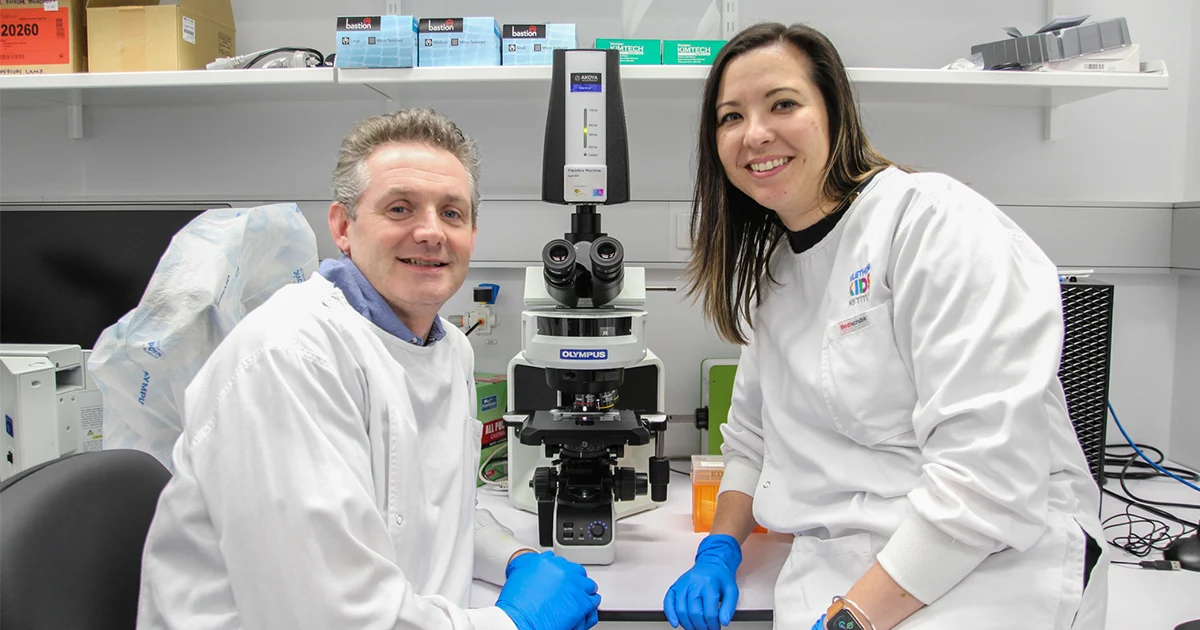
The same can’t be said for paediatric brain cancer researcher, Dr Raelene Endersby.
“I hate talking about survival rates. They don’t speak to the journey of families or individuality of a child,” she says.
“When people see a 70% survival rate, they often assume that once treatment is over, a child is cured and simply goes on to live a happy, normal life. That’s not the reality. Even when children survive, many face significant and lifelong side effects.”
Dr Endersby says she sees the internal struggle faced by patients and their families in the wake of harsh treatments.
“I speak to parents who are deeply grateful that their child has survived medulloblastoma or another brain cancer, but that gratitude sits alongside real pain as they watch their child live with the side effects of treatment,” she says.
“Some of the most serious are neurocognitive effects caused by intensive therapies, particularly radiation. It almost freezes it in time and blocks normal development. Side effects that might be dismissed as cosmetic – hair loss and stunted growth – can profoundly affect quality of life for teenagers.
“These children are expected to feel grateful because the treatment has saved their lives. But for many, it can feel like a poisoned chalice: survival accompanied by a lifetime of challenges. The mental health toll of balancing that reality is significant, not only for the patients themselves but for their families. Seeing this firsthand is why we are so determined to change it.”
Based at The Kids Cancer Research Institute Australia in Perth, Dr Endersby is in a position better than most to speak to the evolution of paediatric brain cancer research in Australia. The medulloblastoma researcher says that while we’ve come a long way, there’s plenty of work still to be done.
“When I got started, there was barely anyone in Australia doing brain cancer research. There were very few laboratory models we could even study at the time.
There was a real gap in our ability to tackle this scientific and medical problem, which is where I saw both a need and an opportunity to focus my research
“I’ve seen how far brain cancer research has come internationally, including the contributions that Australian scientists have made to growing that knowledge.
“When I began, we knew almost nothing about these diseases; now we know so much more. There are new drugs in clinical trials and new drugs being approved, which gives real reason for hope.
“At the same time, it’s frustrating. Not many of those trials have shifted the dial as far as we’d like in improving survival rates. We also need to do more to improve long-term outcomes for survivors, particularly given the impact of the treatments they’ve had to endure.”
We're charting a course to a world without brain cancer.
Join the crew today!
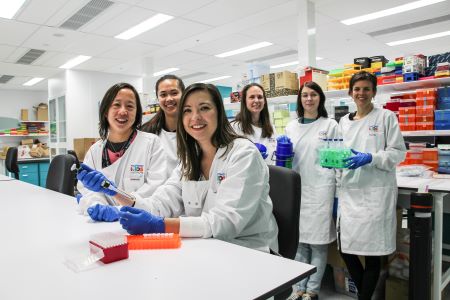
Dr Endersby and her team are combining novel drugs with radiation that has delivered positive results when tested on mice. These results have been assessed via high resolution imaging.
A member of the team, who specialises in child neuroscience and neuropsychology, has been running behavioural testing in the animals, measuring memory formation, learning ability, social interaction, curiosity and anxiety. It allows the team to assess how treatment is affecting cognitive and psychological function.
The addition of the new drug alongside radiation does make changes to the brain, but not severely like current treatments. The team is now seeking further funding to expand their studies to ensure that learning, memory or neurological development aren’t affected.
If it is found that they have not harmed those functions, it could lead to human clinical trials.
Dr Endersby says that it's just one of many projects currently being worked on at the Institute.
“We’ve applied for funding to investigate drugs that could be administered in conjunction with brain cancer treatment to protect the organ,” she says.
‘Promising data from the Alzheimer’s and Parkinson’s fields show some drugs can be neuroprotective and help preserve cognitive function. We're aiming to test the combination in animal models to build evidence that could support the survivorship component of care.”
The motivations of Dr Endersby and her team are clear. Despite the challenges that come with a career in science, there is a strong desire to honour families that have been affected by brain cancer by progressing the hard work done by researchers in the labs to becoming standards of care.
The involvement and work of The Kids’ Cancer Project is front of mind for Dr Endersby as she looks to make that progress.
“The Kids’ Cancer Project’s new research strategy and funding structure has genuine balance. It supports translational science, discovery work and clinical trials, and those areas naturally feed into one another through close collaboration. It also places real emphasis on survivorship, focusing on quality of life and long-term care.
Sustained research investment is critical. There is an enormous amount of promising work emerging from labs across Australia, including my own.
"“For children who don’t respond to current treatments or who don’t benefit from a particular clinical trial, we need new options in the pipeline. With continued investment, we are only a few years away from bringing more therapies into clinical trials.”
Investments made from The Kids’ Cancer Project’s generous donor community this Brain Cancer Awareness Month is what Dr Endersby says could bring about those much-needed breakthroughs.
“That future depends on consistent funding to support the scientists doing the work, the infrastructure, and the resources needed to translate discoveries into treatments.
“Without that investment, progress slows, and opportunities can be lost. If research stalls here, breakthroughs may move overseas, where larger systems and greater resources can accelerate development. We cannot risk Australian children missing out on access to those advances.
“Research is a pipeline. It cannot afford to stop. Continued support ensures that when families need new options, those treatments are ready and available to them.”