0

“If it weren’t for The Kids’ Cancer Project, we wouldn’t have been able to kickstart clinical trials in Tasmania. That's the absolute bottom line."
Those are the words of Associate Professor Thomas Walwyn, Tasmania’s Paediatric Adolescent Young Adult Oncologist and the state's top childhood cancer clinician. He's referencing The Kids' Cancer Project's initial pledge of $140,000 in 2017 to establish clinical trials on the island state, with that number growing to more than $300,000. The Tasmanian Government then ensured its security with a $600,000 injection in 2021.
For kids with cancer like Boyd Beckett – a former leukaemia patient from rural NT and the face of our 2026 Easter Bear Appeal – access to services in rural areas can be hard to come by. Many drive hours at a time to receive treatment, while others are flown to neighbouring state capitals. It's why The Kids' Cancer Project's initial funding was so crucial, because it allowed Tasmanian kids with cancer to remain at home, closer to friends, family and school, and now – treatment facilities.
A/Prof Walwyn now runs the program, succeeding its pioneer, Professor John Heath. A/Prof Walwyn spent time in Tasmania in the early 2000s at a time when paediatric oncology service didn’t exist in the island state. After time in the UK, Darwin and Perth, he returned to Hobart in 2024 to begin his role as the state’s top childhood cancer clinician.
Walwyn holds a strong foundation in clinical trials from his time as a medical professional in his native UK and believes they are the standard care of childhood cancer treatment.
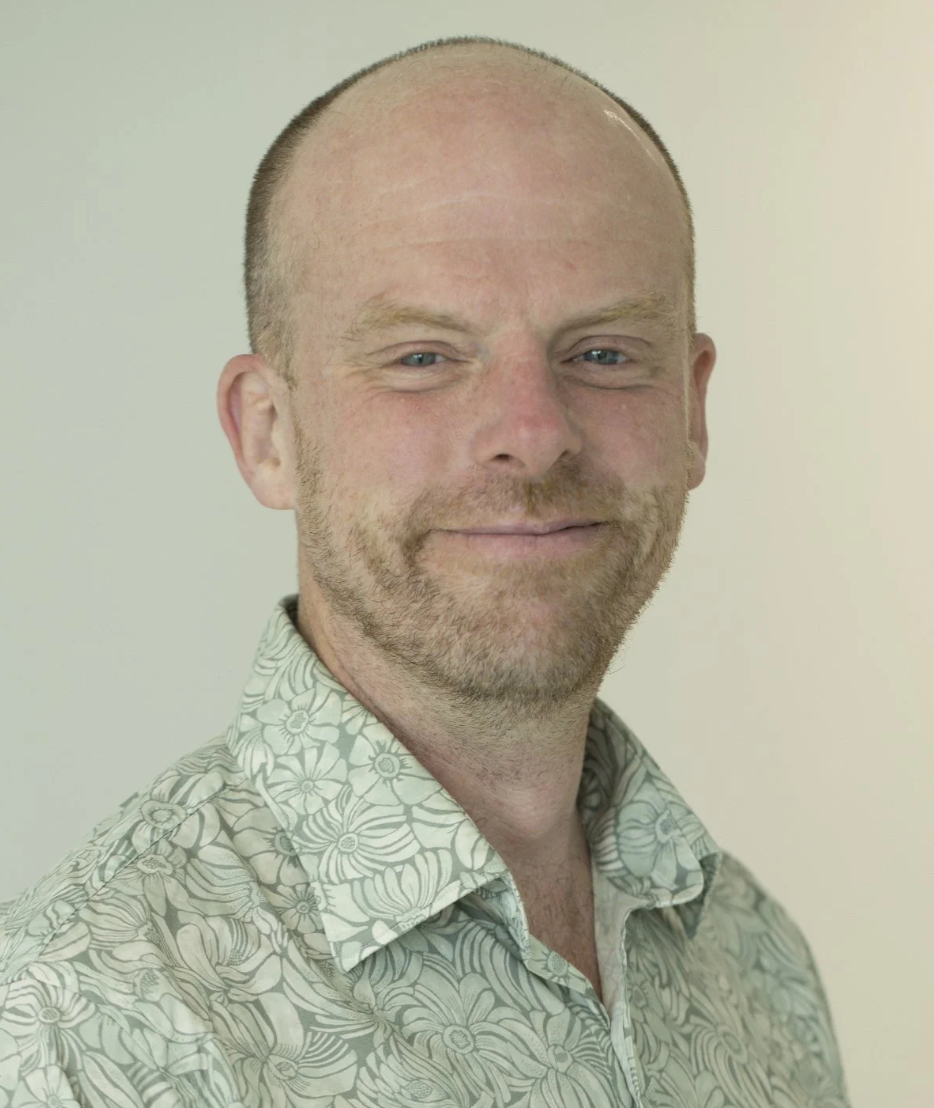
“Access to treatments via clinical trials are fundamentally important,” he says.
A self-confessed outdoor sports junkie and a lover of rural Tasmania’s can-do attitude, A/Prof Walwyn and the wider Royal Hobart Hospital and Tasmanian Health Department are members of ANZCHOG. That membership allowed the state to open studies as part of a wider national group. In addition, a partnership forged with the Royal Children's Hospital in Melbourne helps to keep Tasmanian kids at home as they undergo treatment.
A/Prof Walwyn says that’s key.
“People who haven't had to uproot their lives it won't realise that it's very risky for families' wellbeing to have that sort of upheaval. It’s expensive, and there’s an unspoken toll on families in which they have to run a split family across interstate borders.
“Even in Tasmania we have some patients that are eight hours away from Hobart. We try to run therapy outside Hobart in places like Launceston, but we’re continuing to work to ensure children can be based at home.”
Both public and private investment into local clinicians and health systems has affirmed A/Prof Walwyn’s belief that imaging and surgical procedures can be carried out in an easier manner than in major metropolitan areas like Sydney and Melbourne. That said, there are gaps in the system.
“What’s hard for families in Tasmania is a lack of support groups compared to the bigger cities when there’s a whole ward or outpatient department full of them,” he says.
“The nursing and medical staff here and in Launceston have been very welcoming of changes and updates and improvements. I've also been able to implement state-wide meetings, held weekly, to support the care of patients and the clinicians helping look after them.
A monthly donation to The Kids’ Cancer Project allows you to build long-term impact for kids with cancer.
When you commit to survival with a monthly gift of just $22, you will ensure we can continue to fund bold clinical trials for childhood cancers.
Sign up today.
“I also do a lot more outreach clinics in the north than what there were in the past, which enables patients not to have to travel so far for follow-up and continuity of care.”
The initial groundwork undertaken before Walwyn’s return to Tasmania was carried out in part by The Kids’ Cancer Project. When quizzed on the importance of the charity’s role in providing access to cancer care for Tasmanian kids, A/Prof Walwyn is unequivocal in his response.
“Clinical trials are our core business, an unavoidable part of looking after and giving the best options to children with cancer. In Tasmania, it needed that kickstart.
“The work that The Kids' Cancer Project did to get things started and demonstrate the capability and the need has essentially made it happen where it wouldn't have otherwise happened.
“We’ve had patients come along where we’ve opened a study specifically for them and turned that around through the governance mechanisms in amazingly short times. That can-do attitude and the willingness to open studies for single patients or a small number of patients is something that's done so much good for kids with cancer everywhere,” A/Prof Walwyn says.
“I've got a young man who's just back from having specialist tumour surgery in Melbourne and he's back up on his tractor doing his work at home. Being able to make that work is a proud moment.”
Despite those moments, Walwyn isn’t resting on his laurels. He and his team are now working to improve supportive care services to ensure optimal care for kids with cancer, including child life specialists, clinical psychology, social work and dietetics, where he believes support is currently thin both in Tasmania and on a national scale.
He’s also under no illusions that funding is not necessarily assured.
“Getting an assurance of funding is a process. Many kids' cancer studies aren’t pharma studies, so they don't bring in any money, and there’s a perception at institutional level that clinical trials need to fund themselves.
“For that reason, we still need outside funding and governmental investment to keep things going. It's not officially a long-term thing. It’s why institutions like The Kids’ Cancer Project are currently so vital, but we’re hoping we find additional support in future.”