0

April is Testicular Cancer Awareness Month, shedding light on the struggles faced by male patients that deal with the disease that typically arises between the ages of 15 all the way up to 45.
A largely treatable cancer, testicular cancer has a 95% survival rate, but like many treatable cancers, the side effects can be a lifelong curse. The cancer can be diagnosed both before and after puberty, and in both cases is highly treatable, but it is never an easy ordeal.
Many young males are diagnosed during adolescence or early adulthood, at a time when they’re navigating several key challenges that arise during that time, with embarrassment a genuine concern for growing boys diagnosed with the disease. For those diagnosed pre-puberty, treatment can have life-long side effects that impact growth, fertility and hormonal function.
It’s those long-lasting effects and a lack of human-relevant research models that outlines the need for research that improves long-term outcomes.
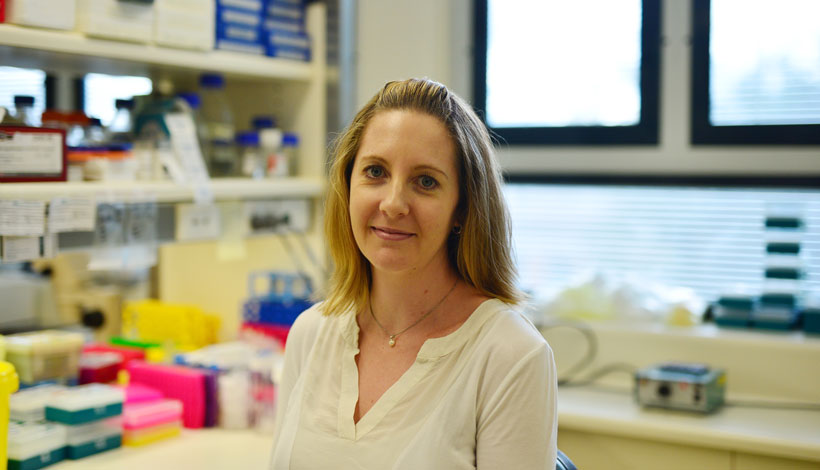
The University of Queensland’s Dr Cassy Spiller has looked to service that need.
A monthly donation to The Kids’ Cancer Project allows you to build long-term impact for kids with cancer.
When you commit to survival with a monthly gift of just $22, you will ensure we can continue to fund bold science.
Sign up today.
A reproductive developmental biologist, Dr Spiller was drawn to testicular cancer because it’s a disease of developmental origin, which worsens in later years.
The Kids’ Cancer Project formerly funded a pilot study spearheaded by Dr Spiller, titled ‘Development of a non-invasive diagnostic and prognostic assay for adolescent testicular cancer’.
Researching how germ cell development (the precursors to sperm) can go wrong in mice, Dr Spiller and her team assessed whether certain molecules that regulate germ cells could help detect errors in cell growth that could lead to cancer.
Alongside collaborators in the Netherlands, UQ scientists worked to create a faster and more patient-friendly detection system of testicular cancer for young boys. By using the molecules as markers, it will make diagnosis and monitoring of patients a lot easier.
"The work we did then showed that testicular cancer is fundamentally a developmental disease, and that understanding how the body grows and changes holds the key to new discoveries,” says Dr Spiller.
"It has since driven me to work on understanding how these tumours arise, so we can detect, and hopefully eventually prevent, them earlier.
Dr Spiller is complimentary of The Kids’ Cancer Project’s research strategy which provided funding to get the project off the ground.
“Support from The Kids’ Cancer Project was absolutely critical,” she says,
“It allowed us to generate the early data needed to test these ideas properly and enabled an international collaboration that gave us access to patient samples not available in Australia. Without that kind of funding, it’s very hard to take a risk on new diagnostic approaches.”
When asked about the importance of initiatives of Testicular Cancer Awareness Month, Dr Spiller is unwavering in her response.
“If there’s one takeaway, it’s that early detection matters and that means awareness matters,” she says.
While cure rates are high, there’s still a lot of work to do around long-term health and quality of life for survivors.
“Continued research funding is critical to drive this forward, and ultimately, I hope we can reach a point where we detect the disease early in all boys at risk and one day prevent it altogether.”
Find out more about the research projects we fund below.