Understanding the familial financial fallout of childhood cancer
2026-04-28
Side effects dictate much of The Kids’ Cancer Project’s remit. The determination to create more effective, less harmful treatments informs much of the charity’s funding, as does the desire to ensure children with cancer both survive and thrive.
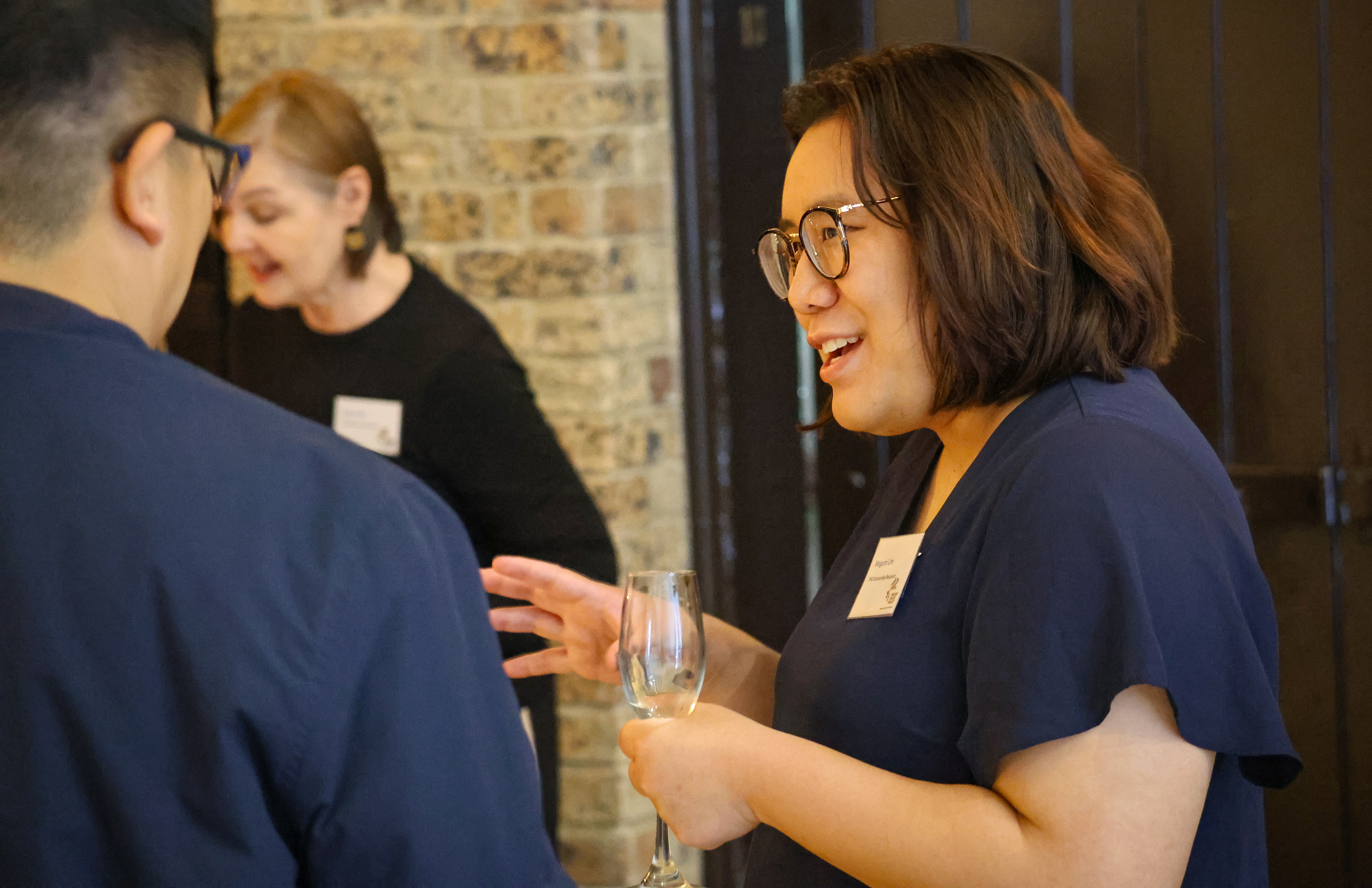
Through funding Megumi “Meg” Lim’s research into health economics, it's also looking at the side effects of treatment beyond the physical. Financial toxicity – the financial distress and hardship patients experience due to the high costs of cancer treatment – has long-term implications for children with cancer and their families.
Meg knows first-hand about the effects of financial hardship in the wake of a tragic diagnosis, because she’s lived it. While at university, her father was diagnosed with stage IV diffuse large B-cell lymphoma. Her family’s finances instantly fell under pressure, to the point that Meg considered taking a hiatus from university to take up a job to support the family.
“Watching how my mum had to take care of my dad, and how stressed the whole family was, made me notice these things more amongst the patients I was treating as a radiation therapist and became more aware of families that were having to take work off to accompany their child,” Meg recalls.
Questions started forming around me. Are these treatments worth it? How long do people actually live when they receive treatment after paying so much money?
“Those experiences unknowingly led me into health economics, looking at cost effectiveness of cancer treatment. I switched my career to focus on it.”
Receiving a PhD ‘top-up’ as part of the Col Reynolds Fellowships, Meg’s research into the financial implications of paediatric cancer treatment saw her utilise a dataset from former Better Challenge Ambassador, Professor Natalie Bradford.
“I ran a costing study that found there was only a fraction of parents who actually received any financial aid support, and even then, it was only a fraction of reimbursements compared to what they were spending.”
“Something is clearly wrong with how families are not getting support — even though you'd think there's a lot of help available in the childhood cancer space.”
A monthly donation to The Kids’ Cancer Project allows you to build long-term impact for kids with cancer.
When you commit to survival with a monthly gift of just $22, you will ensure we can continue to fund bold science.
Sign up today.
Her subsequent study, titled “It was time I could have spent better”—the barriers, enablers, and recommendations for improving access to financial aid when a child has cancer, highlighted the struggles families face in accessing financial assistance.
“Knowing your child has cancer is incredibly stressful. Getting a diagnosis turns your life upside down overnight, and then you’re immediately thinking about treatment, potentially giving up your job, being with your child constantly,” Meg says.
“If a child is a newborn or a toddler, you can’t leave their side. You have zero time for yourself, let alone work or figure out how to get your finances together or apply for help. You're constantly in that room with your child.”
Meg found that money is utilised by families for accommodation to ensure proximity to the hospital. With one or two children’s hospitals at a maximum in each state, the costs begin to pile up, as do the mental health struggles of being separated from the rest of the family and the lack of ability to earn income if protections aren’t on offer.
“In terms of the system overall, it's fragmented. There's no centralised place for families to receive funding,” says Meg.
“Centrelink and the NDIS applications can also take a long time and there’s a lot of back and forth.”
Meg found that the timing of support was imperative in mitigating financial toxicity.
“When a family is on the verge of losing their home or can't pay a utility bill in the middle of winter, they need someone who can help on short notice. They can't wait three months for money to come in.”
In regard to making systemic change, Meg says it goes beyond public sector capability and is hopeful that her PhD findings will assist in raising awareness about the financial fallout faced by families affected from childhood cancer.
Meg is currently developing a prototype app, which is the sum of parts contrived from all four of her PhD papers. Serving as a database for all available supports, the app’s prototype allows a user to apply filters to tailor options based on a child's cancer, age and state, filtering out those supports deemed ineligible.
“When so many families tell you the system is broken, this feels like a potential solution. It's still a prototype and I'm trying to find collaborators and funding to get it off the ground, but it is a start.”
“Applications are often long and confusing as well. That's something I incorporated directly into my app — an AI assistant to help families navigate those questions and suggest how to answer them.”