0

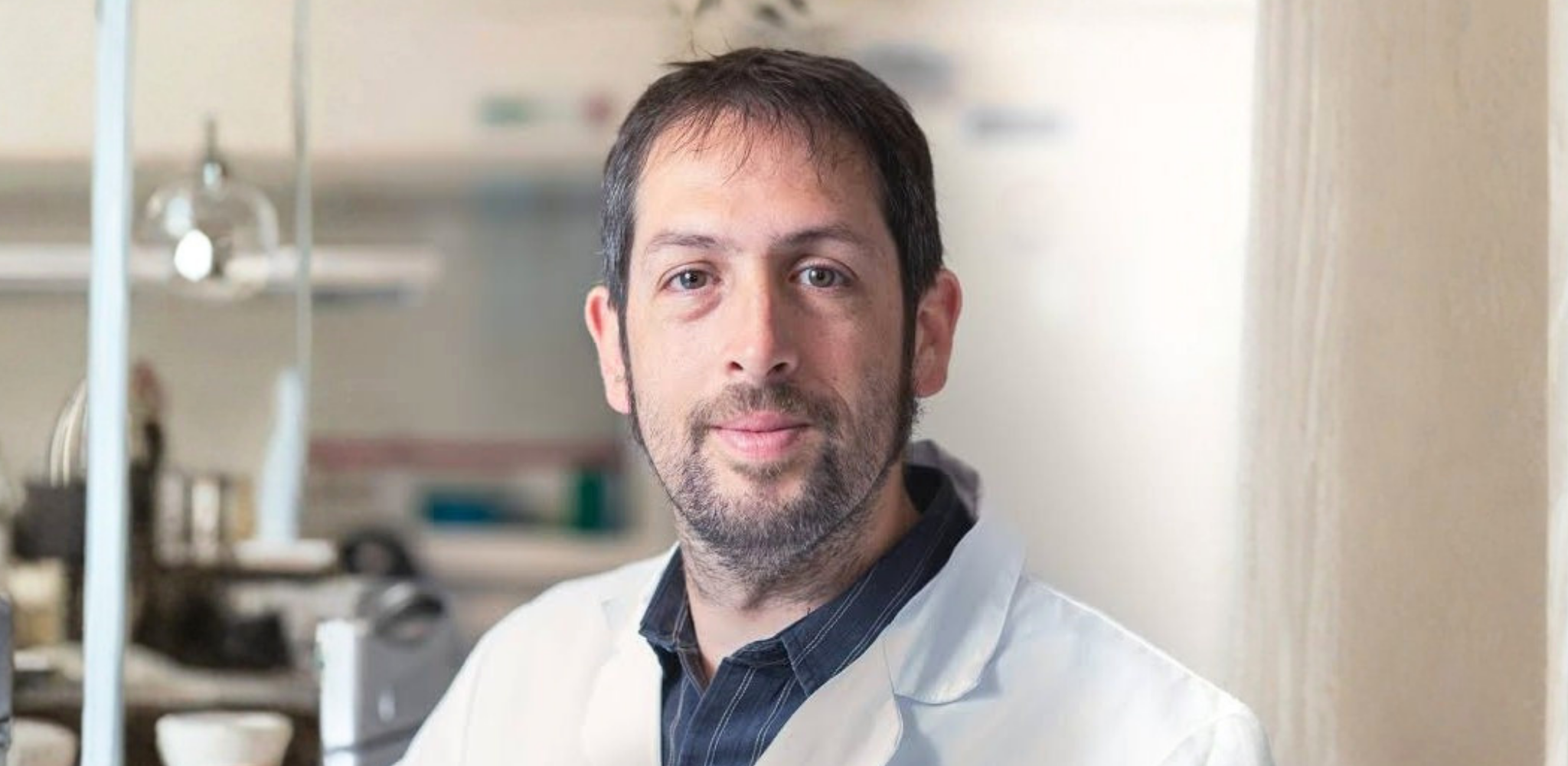
Project title: Rewriting childhood brain cancer survival: Unleashing Cas12a2 against novel circular RNAs
Institute: Flinders University
Funding: $374,378 (October 2026 – October 2029)
Research Pillar: Discover
Cancer Type: Brain and CNS (Glioblastoma (GBM); Diffuse midline glioma (DMG))
Professor Simon Conn is a molecular biologist and cancer researcher at Flinders University, where he leads the Circular RNAs (ribonucleic acid) in Cancer Laboratory. His research focuses on understanding how circular RNAs influence cancer development to improve diagnosis and identify new treatment approaches.
An internationally recognised leader in RNA biology, Professor Conn has published extensively in leading scientific journals, and his discoveries are advancing new approaches to diagnosing and treating some of the most challenging cancers, including those affecting children.
Being recognised by The Kids’ Cancer Project as having developed an approach to improve survival of kids who have (currently) incurable brain cancers is a significant boost to my team’s research program. Having developed technology in the laboratory to kill adult cancer cells and not damage healthy cells, this funding finally allows us to focus on paediatric brain cancer and to test our therapy in animal models as a critical step towards developing a therapy to benefit kids and their loved ones. By collaborating with national and international research leaders and consumers with lived understanding of the specific pain of losing children, this has honed our research focus to curing children with rare, fatal cancers. We are thrilled that with this grant, we have the opportunity to start this process.
This project will tailor a new, personalised treatment for childhood brain cancer that destroys tumour cells while sparing healthy brain cells. Our strategy focuses on circular RNAs (circRNAs) that are small, genetic fragments abundant in cancer cells, and often absent from healthy cells. We will exploit these cancer-specific circRNAs, which we have identified in our laboratory using a novel Trojan Horse, called Cas12a2. Cas12a2 is a protein that can be delivered into cells and only upon binding to these cancer-specific circRNAs, transforms from a passive protein into an insidious weapon which kills only the individual cell it is activated within.
This project will optimise delivery of this therapy in animal models of childhood brain cancer and test its effectiveness in destroying tumours. If successful, this revolutionary project will have achieved a new class of precise, personalised treatments for childhood brain cancer, offering hope for surviving these currently incurable diseases.
Brain cancers are the leading cause of cancer-related death of Australian children. Two of the most aggressive forms – glioblastoma (GBM) and diffuse midline glioma (DMG) – are almost universally fatal, largely because the tumours comprise a variety of cell types, some of which completely evade standard therapy. As a result, tumours rapidly return after treatment which is the same for almost every patient. Therefore, only bespoke strategies which target EVERY cancer cell type for EVERY patient provide hope of a cure for low-survival, paediatric brain cancer.
For both cancers, but notably for DMG where there are no options for surgical removal and limited treatment options, our approach is to be administered via injection and is designed to target tumour cells specifically and not damage healthy cells of the body. Furthermore, by targeting a range of cancer targets simultaneously within the one injection the tumour is much less likely to develop resistance and there is greater potential for relapse-free survival. Our approach is to be able to treat children with these cancers, so that they are not reduced to becoming a devastating statistic.
Children with glioblastoma (GBM) or diffuse midline glioma (DMG) face a dismal five-year survival rate of less than 10%, with the average survival time from diagnosis being approximately 12-15months. Even worse than that, there has been no improvement in these survival statistics for the past 30 years. This is hard to imagine as an adult, but imagine you are a young child facing this diagnosis.
Through your generous donations, you have changed our lives as it allows us to develop our therapy aimed at saving lives of children with universally fatal brain cancers. Because my team and I are so grateful for having this opportunity opened to us, simply thanking you, as donors to The Kids’ Cancer Project, seems insufficient. We do thank you, but better than that, we promise to use these funds to advance this revolutionary new treatment as it is exactly what is needed to change the devastating diagnosis of kids with brain cancer. Our approach addresses aspects of the cancer which have, to date, been unreachable. We will keep all of you in our hearts and minds while we work on this project and are thrilled to progress this research. Thank you.
From a field of outstanding candidates across Australia, The Kids’ Cancer Project has funded the next generation of childhood cancer researchers. Their science-backed research is sure to deliver breakthroughs across a range of areas relating to childhood cancer.