
Project title: Using Paediatric Mouse Models to Identify Strategies that Make Childhood Tumours More Responsive to Immunotherapy
Type of fellowship: PhD Scholarship - Josh McCarroll PhD Excellence Award
Institute: The Children's Cancer Institute
Funding: $30,000 (August 2026 – February 2029)
Research Pillar: Discover
Cancer Type: Neuroblastoma
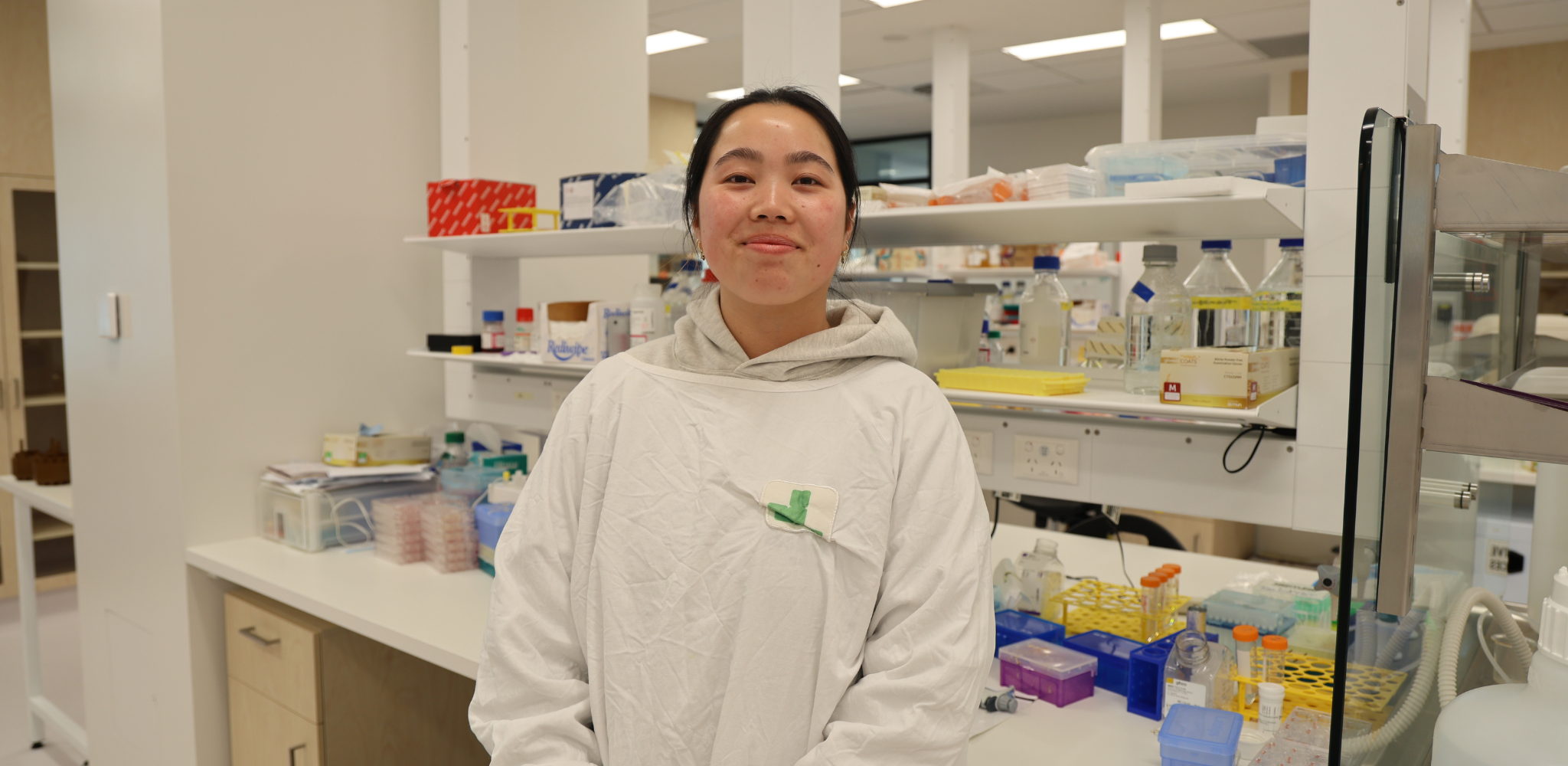
Jasmine Jin is a PhD candidate at the Children's Cancer Institute. She holds a Bachelor of Engineering (Biomedical) (Honours) and a Master of Philosophy (Biomedical Engineering) from the University of Sydney. With more than three years of laboratory experience, Jasmine has built expertise across mechanobiology, cancer biology and translational immunotherapy for paediatric cancers.
What does this grant mean to you?
Receiving the Josh McCarroll PhD Excellence Award is a tremendous honour and is deeply meaningful to me, both professionally and personally. It will provide valuable support throughout my PhD, enabling me to focus on delivering high-quality translational research aimed at improving outcomes for children with high-risk solid cancers. This recognition would also strengthen my academic profile at an early stage of my career, helping to create opportunities for collaboration, networking, and presentations.
On a personal level, receiving an award established in memory of Associate Professor Josh McCarroll carries special significance in which it serves as a reminder of the responsibility I will carry as a researcher working in childhood cancer. The award would be a strong source of encouragement and confidence, motivating me to continue pursuing research that not only advances scientific understanding but also has the potential to make a real difference for children and families affected by these diseases.
What is your project about?
One of the major challenges in childhood solid cancers is that these tumours often do not respond well to immunotherapy. High-risk neuroblastoma remains difficult to treat because the tumour microenvironment restricts the activation of the immune system and limits the effectiveness of treatments such as monoclonal antibodies, with most patients relapsing.
CAR T cell therapies have also shown limited success in solid tumours, with many patients either not responding to treatment or relapsing. This project aims to address these challenges by generating preclinical data to support the development of CBL0137 as a treatment that may improve the effectiveness of immunotherapy. The impact of CBL0137 on the tumour microenvironment will be assessed in a more specialised mouse model that better reflects the immune system of young children, making findings more clinically relevant.
Understanding how CBL0137 changes the tumour microenvironment and boosts immunotherapy could lead to more effective and less harmful treatments for children with solid cancers. In addition, the juvenile mouse model developed in this project will be relevant for future preclinical studies investigating ways to change the tumour environment and improve immunotherapy outcomes in childhood solid cancers.
How could your research help children?
This project directly addresses one of the major challenges in childhood cancer: the poor responsiveness of paediatric solid tumours to immunotherapy. By developing and thoroughly characterising a juvenile Th‑MYCN allograft model, this project will provide the field with a highly relevant preclinical system that more accurately reflects the immune biology of young children than traditional adult mouse models. This alone represents a significant translational advance, as most immunotherapy studies rely on models that do not replicate paediatric immunity.
The project will also investigate how CBL0137 reshapes the paediatric tumour microenvironment and will clarify which immune pathways are required for therapeutic benefit and might identify factors that influence an immune response. These findings could directly inform the design of clinical protocols combining CBL0137 with antibody‑based therapies, future CAR‑T products or other novel immunotherapeutic approaches for children suffering not only from neuroblastoma, but also other solid cancers.
Evaluation of CBL0137 alongside B7‑H3/GD2 CAR‑T cells in a juvenile model will provide critical translational data on whether this drug can improve CAR‑T expansion, tumour clearance, and long‑term immune protection. If successful, this work would support rapid movement towards clinical testing of CBL0137‑based combination immunotherapies in paediatric patients.
What would you like to say to our donors?
Thank you to all the donors of The Kids’ Cancer Project for your ongoing support. Your generosity makes this research possible and gives students like me the opportunity to work towards better treatments for children with cancer while building the foundations of our research careers.
It’s incredibly encouraging to know that there are people willing to invest in research to improve treatment options for children with cancer and collectively work toward a better future for young patients and their families. I am truly grateful for your support and the difference it makes to both our research and the future of childhood cancer care.
Read more from past recipients
From a field of outstanding candidates across Australia, The Kids’ Cancer Project has funded the next generation of childhood cancer researchers. Their science-backed research is sure to deliver breakthroughs across a range of areas relating to childhood cancer.